Cadaqués home
También esto pasaráCadaqués home is more than the family’s summer residence: it holds the routines, pleasures, and losses of several generations, and after the narrator’s mother dies, its rooms become difficult to separate from her memory. The house’s open, sociable life gradually contracts as the mother grows old; in bereavement, the familiar landscape remains radiant, but the home itself seems to have become the person who is gone.
Setting and Domestic Arrangement
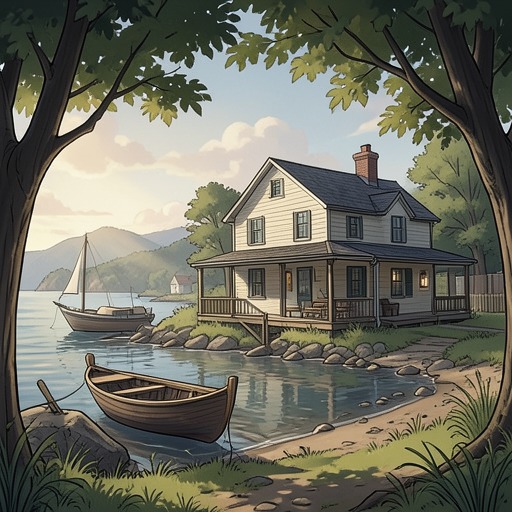
The house is organized around shared life. In the dining room, a large reddish wooden table with a lapis-blue iron base, designed by the narrator’s uncle more than forty years earlier, occupies nearly the entire space. A small hatch connects the room to the tiny kitchen, allowing dishes to be passed through without anyone having to get up. Windows and doors are positioned to let air circulate and daylight spread through the rooms without shadows. These practical arrangements make the house feel built for meals and company, not for solitary retreat.
The family’s life spills beyond the dining room. The terrace looks toward the sea, and the mother’s bedroom is the largest and most beautiful room, with the best view. In earlier summers, doors stood wide open even at night. The house’s physical openness mirrored its role as a place through which relatives, friends, children, and successive generations could pass. That openness changes with the mother’s decline: the doors begin to close, as if an invisible force were narrowing the household’s welcome.
A House Filled by Repeated Summers
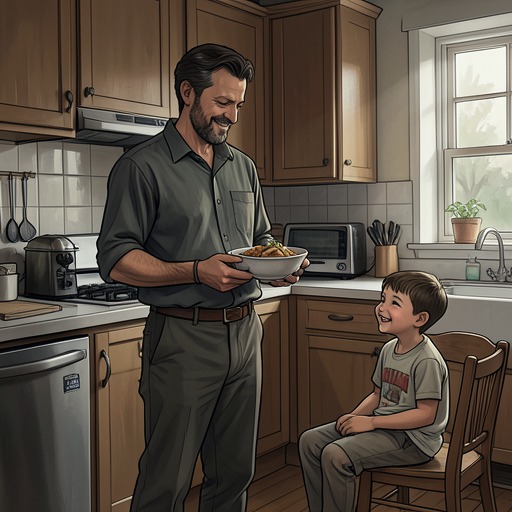
Early memories gather around ordinary rituals: the narrator’s grandfather arriving from Barcelona with crates of fruit; laundry being carried away; large custards brought to the house; gazpacho made by Marisa; long breakfasts of toast and butter; beach towels drying on the railing; reluctant naps, dressing to go into the village, afternoon ice creams, and target shooting. The details make the house a repository of shared time, not simply a backdrop to it. Its history is carried in recurring actions and familiar arrivals as much as in its rooms.
The same space also holds the less orderly intensity of youth. Summers bring first drunkenness, first loves, nights without sleep, laughter, friends who return each year, and the feeling that the world belongs to the young. Later, the house accommodates the conception of the narrator’s first child and trips to Cadaqués with children of her own. The children’s summer mishaps echo those of the narrator’s brother decades earlier, making family history feel repeated in the architecture and habits of the place.
The household’s daily pattern can remain nearly unchanged even as its emotional character shifts. Breakfasts, boating, lunches, naps, and card games continue, yet happiness no longer feels as it once did. Old companions return with children and tired faces; Marisa dies, and her daughter Elenita dies a few years later. The house gathers these losses alongside its pleasures. Its continuity is therefore double-edged: familiar routines preserve a sense of life going on, but they also make the absences within that life more conspicuous.
The Mother’s Presence in the Rooms
The mother’s bedroom gives that accumulation a particular focus. She used to stand at the top of the stairs in long, disheveled summer tunics, directing the day like a general. Even when conversation was taking place on the terrace, she might call out a funny or malicious comment from her room. The bedroom was not isolated from family life; it was one of its commanding centers, a place from which the mother could join in without leaving her own space.
After her death, the narrator cannot bring herself to enter that room. She considers installing Guillem there with Patum, but the thought does not make the space available to her. Its former occupant seems to persist in the very room that once gave her a view over the house and a voice in its shared conversations. At the same time, the narrator describes the house itself as aging with her mother, becoming lonely, and finally becoming her. The home is no longer just a container for memories of the mother; in grief, it seems to have taken on her identity.
Bereavement and the House That Remains
The narrator’s return to Cadaqués brings memories crowding together, but, for once, they do not overwhelm her. The morning light, clear air, and calm sea look almost unchanged from the landscape of her twenties. That visual constancy presses against the record of everything that has changed: the mother’s old age, the narrowing of the household, deaths among family friends, and the narrator’s growing reluctance to visit. The house therefore offers both refuge and painful evidence. It restores the landscape of earlier happiness without restoring the people who made that happiness possible.
The mother’s absence is also registered through Patum. After the death, the dog waits at the bedroom door rather than entering, sniffing around the house for the mother’s scent or some sign that she will return. The narrator recognizes her own search in the dog’s behavior. The house provides familiar routes and thresholds for that longing, but no answer: even a loved room remains unoccupied.
The home’s meaning is thus not fixed as either a lost paradise or a source of comfort. It preserves the open-handed abundance of earlier summers, while its closed doors and empty bedroom make bereavement tangible. Its strongest force comes from holding both realities at once: the landscape still seems to promise that life is beginning, yet the house has accumulated enough memory to show exactly who is missing.